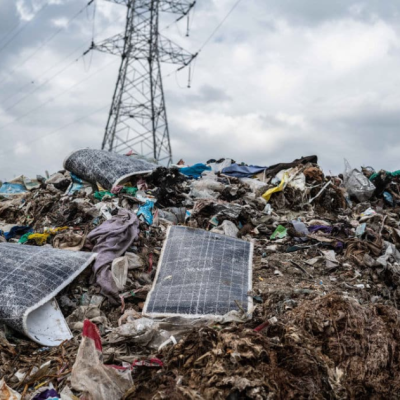

WHERE WILL KENYA'S EXPIRED SOLAR PANELS GO? THE COMING E-WASTE TSUNAMI
Investigative Report
Loading...

Investigative Report
This research explores how AI enhances ESG risk assessments by improving data accuracy, detecting climate, social, and governance risks, and increasing operational efficiency. Despite challenges like bias and data gaps, AI offers significant cost savings and better risk management, positioning it as a key driver of corporate sustainability.
Read MoreKenyan companies are increasingly adopting ESG principles in their operations due to investor expectations, regulatory changes, and the pursuit of sustainable growth. This shift emphasizes environmental stewardship, social responsibility, and robust governance
Read MoreThis research analyzes ESG adoption trends across Africa in 2025, showing how regulatory advances, investor demand, and corporate integration drive sustainable practices. ESG compliance attracts more foreign investment, lowers borrowing costs, and boosts firm resilience. However, challenges like greenwashing and data gaps persist.
Read MoreThis case study explores how Safaricom, EABL, and KenGen are integrating ESG into operations using global frameworks like GRI and TCFD. They focus on climate action, social impact, and governance transparency. ESG adoption enhances investor appeal and sustainability but requires ongoing capacity-building, technology use, and stakeholder engagement.
Read MoreKenya's startup ecosystem is strong, ranking second in Eastern Africa and 63rd globally, with thriving sectors like climate tech, e-commerce, fintech, and agritech. Government programs support startups, and funding opportunities are growing, with a strong focus on youth and women entrepreneurs.
Read MoreAdopting ESG is crucial for investor trust, sustainability, and compliance. Kenyan firms prioritize social impact (healthcare, education, poverty reduction) via technology. Challenges include data collection, limited resources, political instability and economic issues.
Read MoreCompanies on the NSE must adopt ESG practices to boost sustainability and trust. Key areas include ethical governance, social responsibility, and environmental action. Success stories from KCB, Safaricom, and EABL show positive impact. AI tools and ESG ratings now support transparency and performance.
Read MoreKenya aims to cut emissions by 32% by 2030 and leads Africa in carbon trading, with over 52 million credits issued. New 2024 regulations support market growth, while public-private efforts drive innovation and community-based projects. Kenya is poised to become a regional carbon trading hub.
Read MoreThis research analyzes how Kenyan banks are integrating ESG lending into their operations. Through sustainability-linked loans, environmental projects, and financial inclusion, they are driving economic growth, environmental resilience, and social equity. ESG lending positions these banks as market leaders in sustainable finance.
Read MoreThis research identifies the absence of ESG frameworks as a risk to company performance and reputation. It provides actionable strategies, including leadership engagement, goal setting, and data tools, to help companies implement effective ESG practices and enhance long-term sustainability.
Read MoreKenyan banks are scaling up ESG financing, with KCB, Absa, DTB, and Stanbic leading green loan initiatives. Backed by CBK regulations and KBA’s Sustainable Finance Initiative, major projects like Safaricom’s ESG loan and the Clean BRT system highlight the country’s shift toward sustainable, inclusive growth.
Read More