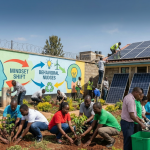
A feasibility assessment identifying agriculture, ESG/environmental initiatives, and financial literacy as high-priority sectors for blockchain implementation in Kenya, leveraging the nation's world-class M-Pesa infrastructure and newly enacted regulatory frameworks. This analysis reveals how Kenya can transform key economic sectors and establish itself as East Africa's blockchain innovation hub.
This document synthesizes a feasibility assessment of implementing global blockchain innovations across five key sectors in Kenya: agriculture, responsible gaming, ESG/environmental initiatives, financial literacy, and road safety. The analysis identifies immediate opportunities driven by Kenya's mature digital payments ecosystem and a transformative shift in its regulatory landscape.
Key Takeaways:
High-Priority Sectors: Agriculture, ESG/environmental initiatives, and financial literacy are identified as high-feasibility sectors for blockchain implementation between 2025 and 2027. These areas can directly leverage Kenya's existing M-Pesa infrastructure and benefit from newly enacted supportive regulations.
Regulatory Transformation: Kenya has transitioned from a cautious to a proactive regulatory stance. The Virtual Asset Service Providers (VASP) Bill 2025 and the Gambling Control Act 2025 establish comprehensive licensing frameworks, positioning the nation as a potential blockchain innovation hub for East Africa.
Infrastructure Advantage: Kenya's mobile money ecosystem is a critical enabler. M-Pesa processed KES 722.52 billion monthly as of July 2022, and successful pilots, such as the Celo stablecoin project, have proven the viability of blockchain-to-mobile-money conversions. The upcoming 2025 Fast Payment System will further enhance real-time transaction capabilities.
Binding Constraint: Rural internet connectivity is the single most significant barrier to widespread adoption. With only 17% of rural Kenyans having internet access compared to 44% in urban areas, and national 4G coverage at just 57%, the reach of blockchain solutions, particularly in agriculture, is fundamentally limited.
Top Recommendation: The immediate investment priority is agriculture, specifically in supply chain traceability. Proven models from Dimitra and AgUnity demonstrate rapid farmer adoption, even with low digital literacy, when solutions are localized with Swahili interfaces and implemented through cooperative structures.
Introduction and Background
Kenya's unique combination of a mature digital payments network, a burgeoning regulatory framework, and a young, tech-savvy populace creates a fertile ground for blockchain adoption. However, significant infrastructure and skills gaps must be addressed.
Strengths and Enablers
Dominant Mobile Money Ecosystem: Mobile money platforms are deeply integrated into the economy, with 59% of Kenya's GDP flowing through them. The M-Pesa agent network is the most extensive in Africa.
Payment Interoperability: The Central Bank of Kenya (CBK) has mandated interoperability between major mobile money providers (M-Pesa, Airtel Money, T-Kash), creating a fluid digital payment environment.
Proactive Regulatory Frameworks:
Virtual Asset Service Providers (VASP) Bill 2025: Provides a clear licensing path for stablecoins, exchanges, and other blockchain services under the CBK and Capital Markets Authority.
Gambling Control Act 2025: Replaces the old licensing board with a modern Gambling Regulatory Authority (GRA) and mandates real-time monitoring systems that align with blockchain's capabilities.
Renewable Energy: With 90% of its electricity generated from renewable sources, Kenya is well-positioned for the energy demands of blockchain technology while maintaining its green credentials.
Data and Analysis
Sector-Specific Feasibility Analysis
The analysis evaluates five strategic sectors, revealing varying levels of feasibility based on infrastructure readiness, regulatory alignment, and existing pilot project success.
1. Agriculture Sector
Feasibility Rating: 85% (HIGH)
The agricultural sector, representing 35% of GDP, presents the most immediate and impactful opportunity for blockchain implementation.
Global Models: Innovations like the IBM Agribusiness Digital Wallet, BanQu's Economic Passport (which saw a 17% farmer revenue increase in Zambia), and Dimitra's Connected Farmer Platform provide proven blueprints for enhancing traceability and automating payments via smart contracts.
Kenyan Evidence: Successful pilots confirm high potential for adoption.
Critical Success Factors: Leveraging M-Pesa agents for support, ensuring Swahili localization, using cooperative structures (SACCOs/chamas) for group adoption, and training through programs like NairoBits.
Primary Barriers: Rural connectivity (95% severity), high infrastructure costs for IoT sensors and blockchain nodes (80% severity), and a technical expertise gap (75% severity).
Project
Scale
Key Outcomes
Success Rate
Dimitra + One Million Avocados
1,200+ farmers
Utilized a Swahili interface for pest reporting and export traceability.
90%
AgUnity Kakamega (2020-2021)
60 participants
Showed enthusiastic farmer uptake despite COVID-19 and low digital literacy.
85%
GSMA Kenya Analysis (2025)
National assessment
Identified Kenya as a priority market for blockchain in agriculture.
N/A
2. ESG/Environmental Sector
Feasibility Rating: 80% (HIGH)
Kenya's government leadership and strong renewable energy profile make this a high-potential sector for blockchain-based carbon credit and climate finance solutions.
Global Models: EY's OpsChain ESG prevents double-counting of carbon credits, Regen Network tokenizes ecological credits, and Etherisc's smart contract-based insurance has already been piloted in Kenya, enrolling 20,000 farmers for automated weather-based payouts.
Kenyan Context: Strong government commitment is demonstrated by President Ruto's 2024 Solar Carbon Credits Initiative and a target of 100% renewable energy by 2030. KenGen has already generated $32.05M from carbon credits.
Critical Success Factors: Strong government leadership, growing global demand for verifiable ESG investments, and the potential to provide smallholder farmers with access to climate finance.
Primary Barriers: The high cost of third-party verification (70% severity), limited farmer awareness of carbon credit mechanics (75% severity), and scalability challenges of blockchain networks (65% severity).
3. Financial Literacy Sector
Feasibility Rating: 75% (HIGH)
With 85% of Kenyans in the informal sector, blockchain offers a powerful tool for financial inclusion and education.
Global Models & Kenyan Pilots:
Regini Finance (2025 Kenya Pilot): Enabled 150 waste collectors to access stablecoin savings via WhatsApp/USSD, earning rewards for completing financial literacy modules.
Celo Kibera Pilot (2021): 200 youths earned cUSD stablecoins for digital microwork, which they instantly converted to KES via M-Pesa, proving the blockchain-to-mobile money pathway.
Uptota: Provides blockchain-based educational credentials (NFTs) for global employer verification.
Critical Success Factors: Seamless integration with M-Pesa, a clear regulatory path provided by the VASP Bill 2025, and integration with existing training programs like NairoBits (expanding to 10,000 youth annually) and AFRALTI/IBM (targeting 50,000 youth).
Primary Barriers: Low awareness of stablecoins versus volatile cryptocurrencies (70% severity), public stigma from past crypto scams (65% severity), and a lack of standardized blockchain education in Swahili (50% severity).
4. Responsible Gaming Sector
Feasibility Rating: 60% (MEDIUM)
The new Gambling Control Act 2025 creates a clear, albeit challenging, path for blockchain adoption in this sector.
Global Models: Provably Fair Gaming platforms (FunFair, Edgeless) use smart contracts to ensure game integrity. Player protection systems use real-time behavioral tracking to trigger automated interventions like deposit limits or self-exclusion.
Kenyan Context: The Gambling Control Act 2025 mandates real-time transaction monitoring and robust player protection, requirements that align perfectly with blockchain's capabilities. The transition to the new Gambling Regulatory Authority (GRA) is mandated by February 2026.
Critical Success Factors: The direct alignment of blockchain capabilities with the GRA's new regulatory framework and the potential for early adopters to gain a competitive advantage.
Primary Barriers: Regulatory uncertainty during the transition period (60% severity), the complexity and cost of compliance with new capital and ownership rules (70-75% severity), and operators' unfamiliarity with the technology (65% severity).
5. Road Safety Sector
Feasibility Rating: 55% (MEDIUM-LOW)
While blockchain could address endemic corruption and insurance fraud, implementation is hampered by prohibitive infrastructure costs and institutional resistance.
Global Models: Usage-based insurance that adjusts premiums based on real-time vehicle data, transparent traffic enforcement systems using blockchain to immutably store evidence, and digital vehicle manifests for accident response.
Kenyan Context: A pilot by Safewayz/iLab Kenya allows citizens to report traffic violations via SMS, which are then immutably stored on a blockchain for NTSA analysis. The potential to reduce insurance fraud provides a strong incentive for major insurers.
Critical Success Factors: Partnership with the insurance industry, integration with the National Transport and Safety Authority (NTSA), and the use of privacy-preserving technologies.
Primary Barriers: Massive infrastructure costs for vehicle connectivity (90% severity), rural connectivity gaps (85% severity), institutional resistance from police who may oppose transparency (80% severity), and the absence of regulatory standards for blockchain vehicle data (70% severity).
Key Findings
Kenya is uniquely positioned to become a leader in blockchain adoption in Africa. Its world-class mobile money infrastructure, combined with recent, forward-thinking regulatory frameworks, provides a powerful foundation for innovation. The highest-impact opportunities lie in agriculture, ESG, and financial literacy, where proven pilots demonstrate clear pathways to success.
However, this potential is contingent on decisively addressing the binding constraint of rural connectivity. Without a concerted public-private investment to bridge the digital divide, the benefits of blockchain will not reach the millions of smallholder farmers who stand to gain the most. Success requires a coordinated, multi-stakeholder effort focused on inclusive design, evidence-based scaling, and building a robust talent pipeline. By executing a clear strategic roadmap, Kenya can transform its key economic sectors and establish itself as the blockchain hub for East Africa by 2030.
Recommendations
Scale Agriculture Blockchain: Commit in co-funding to scale the Dimitra and AgUnity models nationally.
Implement ESG Blockchain: Allocate for Solar Carbon Credits Initiative with blockchain verification infrastructure, aiming to earn carbon credits by 2027.
Launch Financial Literacy Programs: Invest to integrate stablecoin savings models (like Regini Finance) into national youth training curricula (NairoBits, AFRALTI).
Drive Gaming Compliance: The GRA must publish detailed blockchain compliance standards in Q1 2025 to guide the industry's estimated $15-20M investment in meeting the February 2026 deadline.
Risk Mitigation
Rural Connectivity (High Risk): Mitigate with government subsidies, USSD/SMS fallback interfaces, and satellite internet exploration.
Technical Expertise Gap (High Risk): Address through partnerships with international platforms, accelerated university programs, and tax incentives to retain talent.
Digital Literacy Barriers (High Risk): Counter with localized training via cooperatives, M-Pesa agent support, and intuitive user interfaces.
Infrastructure Costs (High Risk): Manage through cooperative cost-sharing models, international development grants, and phased deployments.
This report analyzes how insurance serves as a critical enabler of AI industrialization by leveraging AI to improve operations, develop new risk products, strengthen governance, and strategically position insurers for competitiveness in the AI-driven economy.
As the nation implements comprehensive cryptocurrency regulation, it positions itself as the gateway for institutional investment into Africa's digital economy but faces critical implementation challenges ahead.
This report examines Kenya’s digital health expansion, the emerging role of advanced AI tools such as ChatGPT Health, and how coordinated action by healthtech companies, government, and NGOs can scale ethical, inclusive, and system-integrated digital health solutions, especially in mental health and wellness.